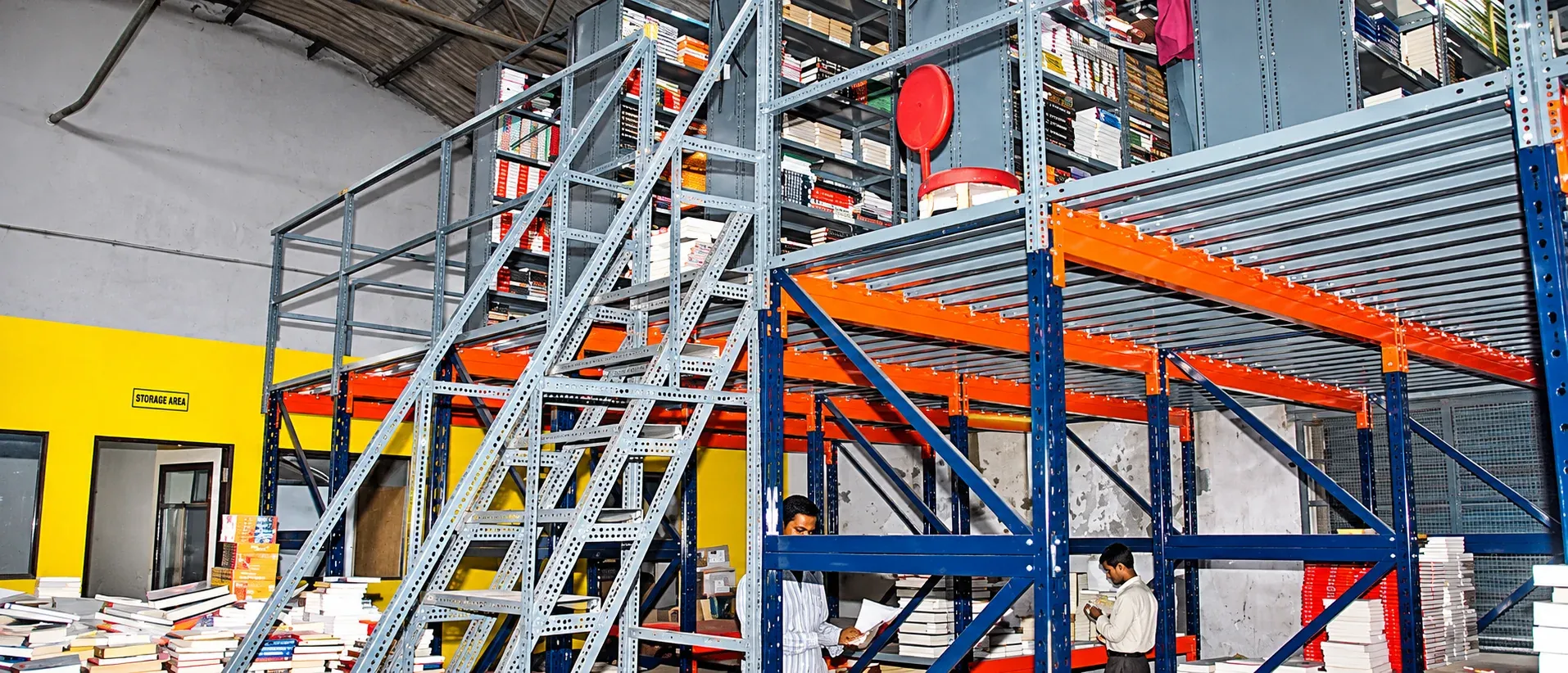
Both two-tier racking systems and mezzanine floors make use of warehouse height. They are not always interchangeable. The difference lies in how the upper level is supported, used and accessed, and in how storage activities are arranged on each level.
Two-tier racking systems
A two-tier racking arrangement combines storage with access to a second level. It may be considered when the main objective is to organise inventory vertically while retaining shelf-level access. The rack layout and access arrangement need to be planned together.
Mezzanine floors
A mezzanine provides an elevated floor area that may support a wider range of activities, depending on its approved and engineered design. It can be useful for different storage configurations or work functions, but it also introduces structural, access and approval considerations.
Compare your operational requirements
- Storage pattern: Are the goods mainly shelf-based, palletised or mixed?
- Access: How often must people or materials travel between levels?
- Change over time: Might the activities or storage system change later?
- Structure: What do the building and existing floor conditions allow?
- Materials handling: How will goods move safely to the upper level?
- Approvals: Which technical checks or permissions apply to the proposed installation?
Layouts can look similar but behave differently
A drawing may show comparable upper-level areas in both solutions. However, the everyday operating patterns, aisle requirements and system limitations may be different. Evaluate movement routes, loading assumptions and maintenance requirements alongside available floor area.
Before deciding
Share a clear use case, warehouse dimensions and expected loads with the engineering team. Review the proposed structure and access design with qualified professionals. The best option is the one that supports safe, efficient operation within the site’s constraints.
Frequently asked questions
Is two-tier racking the same as a mezzanine floor?
No. Both add vertical usable space, but the support structure, intended use and layout may differ.
Which is better for future changes?
It depends on the specific design and intended change. Compare documented configurations and constraints rather than assuming one is always more flexible.